
Pulpit Censorship: Part III – When the Gospel Offends: Legal Risks, Church Strategy, and Uncompromising Hope
Rev. Dr. Sanette Fleming, DMin, MDiv
President, I Was Just Thinking Ministries
“And you will be hated by all for My name’s sake. But the one who endures to the end will be saved.”
—Matthew 10:22, ESV
“We are afflicted in every way, but not crushed… always carrying in the body the death of Jesus, so that the life of Jesus may also be manifested in our bodies.”
—2 Corinthians 4:8–10, ESV
Introduction: Courage in the Face of Criminalization
As previously discussed, the legal erosion of religious liberty (Part I) and the Biblical imperative to preach the full counsel of God (Part II) converge in a crisis point for contemporary clergy and rabbis. Today, ministers across denominational lines—including those in the Messianic community—must wrestle with this question: What happens when the Gospel becomes criminal?
This final article in the Pulpit Censorship series examines:
- The legal and cultural risks facing clergy today
- Biblical responses to state-sanctioned silencing
- Strategic pastoral frameworks for gospel-centered resistance
- A prophetic call to endurance and hope
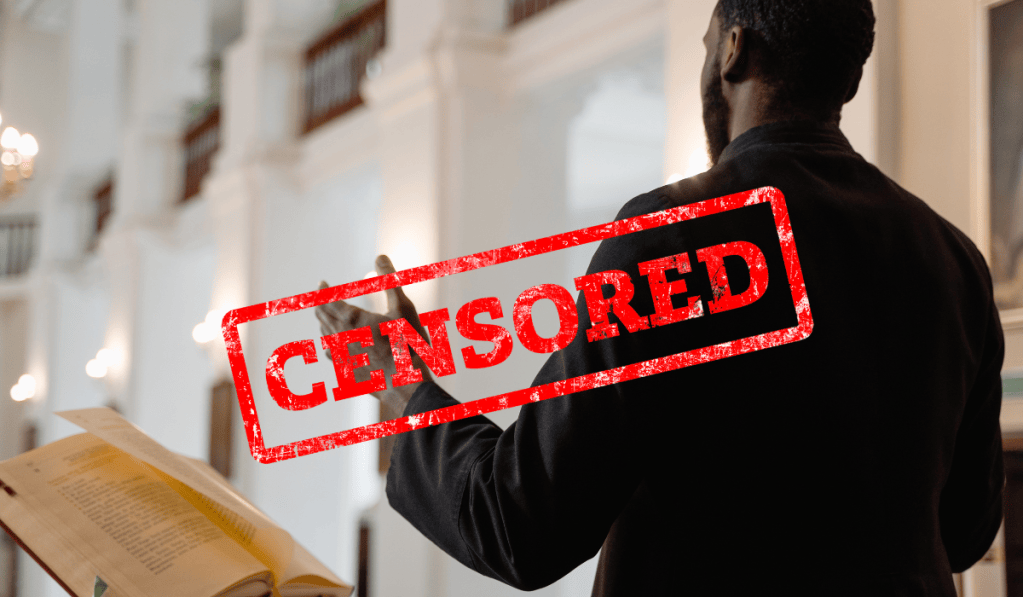
Legal and Cultural Risks: A Sobering Forecast
While legal precedent differs by nation, a growing number of democratic countries have enacted or are debating laws that implicitly (or explicitly) criminalize biblical preaching on topics such as:
- Sexual ethics (Gen. 2:24; Rom. 1:26-27; 1 Cor. 6:9-11)
- The exclusivity of salvation in Yeshua (John 14:6; Acts 4:12)
- The sanctity of life (Exod. 20:13; Ps. 139:13-16)
- Gender distinctions (Gen. 1:27; Deut. 22:5; Matt. 19:4-6)
The U.S. Commission on International Religious Freedom (2024 report) acknowledged that even in Western democracies, “religious speech is increasingly at odds with evolving hate speech laws.”¹
A survey by the Evangelical Council for Financial Accountability revealed that 62% of pastors fear legal consequences for addressing cultural issues from the pulpit.² In Canada, under Bill C-4, even offering prayer-based counseling in alignment with Scripture on sexuality can carry a sentence of up to five years in prison.³
Such developments signal an ominous shift: the criminalization of orthodoxy.
Biblical Responses to State-Sanctioned Silencing
The Bible is not silent on how God’s people should respond when faithfulness to His Word becomes illegal.
- Daniel continued to pray despite an imperial ban (Dan. 6:10)
- Peter and John declared, “We must obey God rather than men” (Acts 5:29)
- Paul preached Messiah (Christ) in chains (2 Tim. 2:9)
- The early ekklesia proclaimed Yeshua under Roman surveillance, risking death (Acts 4:31-33)
In each case, the response was not passivity, but prophetic perseverance. The same courage is required of today’s clergy.
Messianic believers, whose identity integrates Torah fidelity with the testimony of Yeshua (Rev. 12:17), bear a double burden and a double witness. We are called to uphold both the holiness code of Leviticus and the liberating grace of the New Covenant. To silence one is to collapse the gospel narrative.
Strategy for Churches and Ministries: Shepherding in Hostile Times
A. Preach the Whole Counsel—Intelligently
Rabbis and clergy must preach truth with clarity and compassion, anticipating legal scrutiny. Yeshua modeled truth-telling with wisdom (Matt. 22:15–22). This does not mean self-censorship, but Spirit-led articulation.
- Use expository preaching to anchor messages in Biblical texts.
- Record and archive sermons for transparency and legal defense.
- Equip the congregation with Biblical literacy and apologetics.
B. Establish Legal Protections
Synagogues, churches, and ministries must secure religious liberty protections. This includes:
- Clear doctrinal statements aligned with First Amendment protections
- Employee handbooks that include religious exemptions
- Legal counsel for navigating litigation or subpoenas
- Training staff on how to respond to government inquiries
The Alliance Defending Freedom (ADF) provides resources for ministries facing legal threats.⁴ Organizations like the Christian Legal Society and Liberty Counsel also assist clergy in defending their religious rights.
C. Cultivate Courage in the Congregation
Teach believers that persecution is not the exception, but the expectation (2 Tim. 3:12). Congregants must be discipled to:
- Endure cultural alienation
- Speak the truth in love (Eph. 4:15)
- Count the cost of discipleship (Luke 14:28-33)
- Pray for boldness (Acts 4:29)
In an age of fear, the Church must be fearless.
Hopeful Resistance: A Messianic Vision of Endurance
The Scriptures end not in censorship, but in triumph. Revelation 11:3–12 describes two witnesses proclaiming God’s truth before being martyred. The world rejoices at their death—but then God raises them up. This prophetic imagery reminds us that truth cannot be buried. The Word of God lives (Heb. 4:12).
Messianic believers can draw courage from the faithfulness of the early Jewish followers of Yeshua who, despite Roman persecution and Pharisaic hostility, proclaimed the risen Messiah at great personal cost (Acts 2-4).
We are heirs to that testimony. Let the bima and pulpit thunder again. Let sermons be marked by holiness, authority, and tears. Let rabbis and clergy repent of timidity and rise with courage.
For we are not ashamed of the Gospel. (Rom. 1:16)
Conclusion: Let the Watchmen Cry Out
In Isaiah 62, God says:
“I have posted watchmen on your walls, Jerusalem; they will never be silent day or night… give Him no rest till He establishes Jerusalem and makes her the praise of the earth.” (Isa. 62:6-7, NIV)
The preacher is a watchman—not a weather vane. While culture shifts, the call to truth remains.
Let bimas and pulpits burn with conviction. Let the message of Adonai echo eternity. Let no law, no court, no cultural backlash keep the shepherd from feeding the sheep.
To the Jew first, and also to the Greek.
Suggested Reading and Legal Resources
- The Silencing of the Lambs, Erwin Lutzer, Harvest House, 2022.
- A Time for Confidence: Trusting God in a Post-Christian Society, Stephen Nichols, Reformation Trust, 2016.
- Alliance Defending Freedom (ADF) Legal Guide for Churches: www.adflegal.org
- God and Government, Charles Colson, Zondervan, 2007.
Footnotes
- U.S. Commission on International Religious Freedom, Annual Report 2024 (Washington, D.C.: USCIRF, 2024), 19–25.
- ECFA, “2023 National Church Leadership Survey,” accessed March 2025, www.ecfa.org.
- Government of Canada, Bill C-4: An Act to Amend the Criminal Code (Conversion Therapy), 2021.
- Alliance Defending Freedom, “Legal Guide for Churches,” accessed April 2025, https://adflegal.org.